By Gracelyn Barmore-Pooley, Glucksman Ireland House
© Gracelyn Barmore-Pooley, 2024. All rights reserved.

Roscius, First Class New York Packet Ship, Painted by S. Walters, MIT Museum, Vessel ID: 166148, CC-E-0016. [1]
An ad for the Roscius placed in the Evening Post for the New Line Liverpool packets described it as a “splendid, fast sailing, well known packet ship,” and advertised the line’s ships as having cabin, second cabin, and steerage accommodations that were “superior to any other line of packets.”[6] The same advertisement also recommended that “persons wishing to send for their friends to come out from the old country” can have them brought out on packets like Roscius, with drafts payable at the National and Provisional Bank of Ireland as well as banks in London and Liverpool.[7] Clearly, the New Line and most Liverpool to New York packets catered to Irish and English immigrants, and advertisements like these encouraged patterns of chain migration.
The first captain was Master John Collins, who made headlines for saving the crews of multiple shipwrecks. On December 5th, 1839, Collins saw signals of distress flying on the Scotia, which was waterlogged with seventeen feet of water in the hold. Upon Collins’ offer to take passengers on board, “a cheer from the people of the sinking vessel followed, and the thrilling cry arose as of men in the extremest peril suddenly restored to life and hope.”[8] Eighteen men from the crew of the Scotia were rescued, as well as the captain and five more crew members who caught up with the Roscius by jolly-boat half an hour later. On December 7th, 1841, Collins and the Roscius came upon the Erin-go-Bragh in a sinking state, and took on board the Captain, a passenger, and all nineteen crew members, who were in so “imminent” a peril that “they had no time to save an article of their property.”[9] Although passengers were likely impressed by the daring of their captain, it is clear that shipwrecks and peril were part of the crossing that many Irish immigrants experienced.
In May of 1845, the New York Herald published a section titled “Feats of the Roscius,” with multiple letters from passengers describing the “performance of that ship and her captain in the icebergs as something very remarkable.”[10] In this instance, it seems as if the ship went directly to Cape Clear off the West Coast of Ireland, completing the journey in eighteen days despite being delayed five days in the icebergs. The ship entered a foggy area “so dense that no person on board could see 600 yards before them,” and fell in with “immense island[s] of ice,” on their passage, having to navigate around them repeatedly. A group of passengers wrote to their captain, wanting to “express [their] thanks for [his] kind and hospitable attention,” and to testify to his “skill shown in extricating [the] ship from the untoward meeting with ice.”[11] Immigrants from Ireland would often use the popular press to “draw public attention to the behavior of particular officers and their crews,” either to warn against poor treatment or to recognize good service.[12] In response, Asa Eldridge, a Captain long associated with the Roscius, thanked the passengers for their good wishes, and said that “in such lively, excellent company, ennui could not find a place” and described the voyage as “one of the most gratifying events in [his] professional experience.”[13] This camaraderie between passengers and captain made the Roscius a reputable and safe ship to traverse the Atlantic on, and these letters would have encouraged immigrants to choose it for their crossing. The Roscius and other Dramatic line packets were advertised as “remarkably short,” with passages from New York to Liverpool in 1844 taking 19, 20, and 28 days, with the reverse taking 29 and 31 days.[14]
The vast majority of passengers on each voyage of the Roscius were from Ireland, including 55 men and women who emigrated between 1841 and 1854 and later opened accounts with the Emigrant Savings Bank in New York.[15] Among these was Eneas Cannon from Ramelton, Co. Donegal who boarded the Roscius in Liverpool in 1844. A rare passenger list from the summer of 1848 has detailed information about where each passenger was from in Ireland.[16] Of the 379 passengers whose place of origin could be identified, 273 were from Ireland, with 252 identifying a particular county. Notably, 15 were from Armagh, 20 from Donegal, 39 from Galway, 22 from Queen’s County, and 29 from Tyrone. An 1851 voyage under Captain James Shoppy illuminates the extent of the impact of the famine, with all but sixteen of the 428 passengers on board from Ireland.[17] There were also four stowaways, as well as eleven deaths, all Irish. Journeys on the Roscius had darkened, alongside the development of the famine.

Source: Immigrant Ships Transcribers Guild. “Ship Roscius, Liverpool to New York, 8 July 1848.” Accessed November 24, 2024. https://www.immigrantships.net/v6/1800v6/roscius18480708.html. Chart by Gracelyn Barmore-Pooley, Fall 2024, New York University. Based on 273 passengers identified as from Ireland.
The ship was not immune from other dangers as well. In 1853, the Roscius made international news for a “Murder on the High Seas,” with the U.S. Circuit Court trying two cases against members of the crew. First, U.S. vs Daniel Maloney, John Haslam, and John Christian, for the wilful murder of one Emanuel, a seaman, on board the ship Roscius, on the 9th of Jan, 1853, and secondly The United States vs Daniel Maloney and John Christian, for the murder of one of the crew of the ship Roscius who was known as “Yankee Chap,” on the 19th of Jan, 1853.[18] The New York Daily Times had extensive coverage of the first trial, noting that the District Attorney moved that Daniel Moloney and John Christian “be arraigned severally for the murder of Emanuel and Yankee Chap,” with the “prisoners [pleading] not guilty.”[19] Maloney was an American, who had captained a trading vessel between Philadelphia and Liverpool at the age of twenty-three before he assumed the captaincy of the Roscius at twenty-eight.[20] The trial for Emmanuel’s death centered around whether or not the captain was guilty of deliberate murder, or if Emmanuel’s death was manslaughter as the result of a normal beating.
The detailed records from the trials were published, including the testimony of a witness for the prosecution, Lawrence O’Brien, a thirty-three year old crew member from Ireland.[21] He testified he saw Captain Maloney repeatedly “beating him with a belaying pin,” that Emmanuel was “screaming out, crying,” and that O’Brien was “afraid to go aft lest [he] should get the same.”[22] He said that Emmanuel was lashed up to the mizzenmast, handcuffed, and left out there until midnight. He described seeing the dead body as it was brought below deck – the “hands had swelled so that the irons were covered with flesh, and the skin tore off along with the irons; [he] could then see the effects on his face and head; his right eye was half in and half out of his head; his left cheek was cut open.”[23] Another witness for the prosecution, John Waldron, testified that the captain “struck him three or four times over the head…as hard as a person could hit.”[24] Testimony for the defense centered around the fact that the timelines did not align, and that the beating Emmanuel received from the captain was a matter of course. When presenting the case to the jury, the judge spoke extensively about the definition of murder and implied malice, saying that it would “[evince] a wicked and depraved heart” if “one person beats another in a cruel and unusual manner, so that death ensues.”[25] Maloney was found not guilty of murder, but the case demonstrates that corporal punishment, regardless of severity, was commonplace on ships crossing the Atlantic. Passengers certainly would have heard Emmanuel screaming from the decks, and potentially witnessed the beatings. Captains and officers often used violence (or the threat of it) to enforce discipline aboard ships, especially as flogging was not formally outlawed in the American navy until 1862.[26] Beatings like these, though perhaps not as severe, may have been commonplace for Irish emigrants crossing the Atlantic.
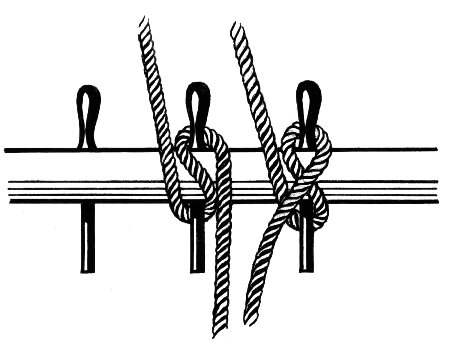
A Belaying Pin and Potential Murder Weapon, from the archives of Pearson Scott Foresman, donated to the Wikimedia Foundation. [27]
[1] “Roscius,” MIT Museum Vessel ID: 166148, accessed November 24, 2024.
[2] Mystic Seaport Museum. New-York Marine Register 1858, p. 63. Accessed November 24, 2024. https://research.mysticseaport.org/item/l0237571858/#77
[3] Carl C. Cutler. Queens of the Western Ocean; the Story of America’s Mail and Passenger Sailing Line. (Annapolis: U.S. Naval Institute, 1961), 210.
[4] Cutler, 211.
[5] Cutler, 211.
[6] “New Line Liverpool Packets,” The Evening Post, November 24, 1841, p. 3. ProQuest Historical Newspapers.
[7] Ibid.
[8] “Shipwreck,” The Examiner, December 29, 1839, p. 12. ProQuest Historical Newspapers.
[9] “Latest from the United States,” The Leeds Mercury, December 18, 1841, p. 4. ProQuest Historical Newspapers.
[10] “Feats of the Roscius,” New York Daily Herald, May 21, 1845, p. 2. ProQuest Historical Newspapers.
[11] Ibid.
[12] Cian T. McMahon, The Coffin Ship: Life and Death at Sea During the Great Irish Famine, (New York University Press, 2021), 201.
[13] See source 10 above. Also https://en.wikipedia.org/wiki/Asa_Eldridge
[14] “Passages of the Dramatic Line,” New York Herald, March 7, 1846, p. 2. ProQuest Historical Newspapers.
[15] Tyler Anbinder, Cormac Ó Gráda, and Simone Wegge, “Emigrant Savings Bank Depositor Database, 1850-1858,” version 3.0, September 13, 2019, accessed via https://doi.org/10.7910/DVN/DDG8SW
[16] Immigrant Ships Transcribers Guild. “Ship Roscius, Liverpool to New York, 8 July 1848.” Accessed November 24, 2024. https://www.immigrantships.net/v6/1800v6/roscius18480708.html.
[17] Immigrant Ship Transcribers Guild. “Ship Roscius, Liverpool to New York, 4 February 1851.” Accessed November 24, 2024. https://www.immigrantships.net/v7/1800v7/roscius18510204.html.
[18] “United States Circuit Court Before Chief Justice Nelson. —Murder on the High Seas,” New York Daily Times, May 24, 1853, p. 3. ProQuest Historical Newspapers.
[19] “Murder on the High Seas,” New York Daily Times, May 28, 1853, p. 3. ProQuest Historical Newspapers.
[20] “Charge of Murder on the High Seas,” New York Daily Herald, June 5, 1853, p. 3. ProQuest Historical Newspapers.
[21] “The Murder on the High Seas, Second Day” New York Daily Times, June 3, 1853, p. 3. ProQuest Historical Newspapers.
[22] Ibid.
[23] Ibid.
[24] Ibid.
[25] “The Murder on the High Seas, Tenth Day,” New York Daily Times, June 13, 1853, p. 3. ProQuest Historical Newspapers.
[26] Cian T. McMahon, The Coffin Ship: Life and Death at Sea During the Great Irish Famine, (New York University Press, 2021), 110.
[27] From the archives of Pearson Scott Foresman, donated to the Wikimedia Foundation. https://en.wikipedia.org/wiki/Belaying_pin
[28] Mystic Seaport Museum. New-York Marine Register 1858, p. 63. Accessed November 24, 2024. https://research.mysticseaport.org/item/l0237571858/#77
[29] “Shipwrecks. Loss of the Packet Ship Roscius—Rescue of her Officers and Crew—Their Arrival at this Port,” New York Times, September 1, 1860, p. 8. ProQuest Historical Newspapers.
[30] Ibid.